Friday, May 17, 2013

'Astroarchaeologists' to Revive Dead Satellite

Satellite
Satellite

It sounds like the opener to a sci-fi B-movie plot: Scientists find an old, dead satellite from the 1970′s orbiting Earth. Out of interest, they send a command to the chunk of space junk to switch it on, just on the off-chance its circuits are still intact…

However, this is not a fictional account of tinkering with 40-year old technology. A British Ph.D. student really wants to wake up an old satellite, one that hasn’t transmitted since 1996.

The satellite, called Prospero X3, is the only British satellite to have been launched by a British rocket in 1971. To commemorate the 40th anniversary of its launch, Roger Duthie and colleagues from University College London’s Mullard Space Science Laboratory (MSSL) want to reestablish contact with the 66 kilogram silent spacecraft.

The satellite, called Prospero X3, is the only British satellite to have been launched by a British rocket in 1971. To commemorate the 40th anniversary of its launch, Roger Duthie and colleagues from University College London’s Mullard Space Science Laboratory (MSSL) want to reestablish contact with the 66 kilogram silent spacecraft.
Prospero was designed to investigate the orbital space environment and its mission was completed in 1973. However, for another two decades the satellite was contacted annually.

Although the program was canceled before Prospero was launched atop a Black Arrow rocket on Oct. 28, 1971, there has been a resurgence in British interests in space. The nation has an active (and profitable) satellite production industry, but since that single 1971 launch, Britain has depended on other space agencies to get their hardware into space.

But last year, the UK Space Agency was set up to oversee all civil interests in space, so the situation is gradually changing.

Therefore, to signify the 40th anniversary of the only British satellite to have ever been launched by a British rocket will be of huge national interest and pride. Enter Duthie who hopes to ‘talk’ with Prospero’s old circuits. Due to the nature of their work, Duthie and his team call themselves “Astro-archaeologists.”
The task to communicate with this spacecraft is no small one, made even more difficult by the fact that the group who used to communicate with the satellite had been disbanded and communication codes were lost.

“The technical reports made in the 1970s were thought to have been lost,” Duthie told BBC News. “We talked to the people involved in Prospero, searched through dusty boxes in attics and tried the library at [the Royal Aircraft Establishment in Farnborough].”

In a stroke of good fortune, Prospero’s codes were found, typed on a piece of paper in the National Archives at Kew, London.

Although they may have the “key” to the spacecraft, the team need to build custom equipment to transmit a signal and get permission from the UK broadcast regulator Ofcom to use the radio frequency now utilized by other satellites in orbit.

Interestingly, once everything is set up on the ground, and if communication is possible — and that’s a big if, space can be a harsh environment for any electronics, regardless of which century they were built — the researchers may find that some of the scientific payload is still operational.

“It’s an artifact of British engineering; we should find out how it’s performing,” said Duthie.

For more on the UK’s Black Arrow rocket, watch the fascinating documentary, “Once We Had a Rocket”:

Intel ex-CEO looks back at biggest blown call: Missing out on the iPhone

Intel X-CEO
Intel X-CEO

Paul Otellini, who retired as the chip giant's CEO on Thursday, tells The Atlantic that he didn't do what it takes for Intel to be in Apple's initial smartphone.

Paul Otellini passed up one of the biggest opportunities in Intel's history -- supplying chips for the first iPhone, the chipmaker's former CEO said.
Otellini "decided against doing what it took" to make the chips for Apple's smartphone, The Atlantic reported, based on an interview with the newly retired executive. Here's what he told the publication:

We ended up not winning it or passing on it, depending on how you want to view it. And the world would have been a lot different if we'd done it. The thing you have to remember is that this was before the iPhone was introduced and no one knew what the iPhone would do...At the end of the day, there was a chip that they were interested in that they wanted to pay a certain price for and not a nickel more and that price was below our forecasted cost. I couldn't see it. It wasn't one of these things you can make up on volume. And in hindsight, the forecasted cost was wrong and the volume was 100x what anyone thought.
He added that "my gut told me to say yes."
Otellini stepped down as Intel's CEO on Thursday, handing the reins over to the company's manufacturing head, Brian Krzanich. During his time, Intel dominated the PC and server chip business, but it largely missed out on mobile devices. The company has made some traction in recent months, but it still isn't in any blockbuster, flagship devices. In addition, it's late with the development of 4G LTE, which will continue to hinder its chances in the market.As Otellini noted, it wasn't clear several years ago how well Apple's first iPhone would sell or that such a device would change the entire computing industry. One thing Intel has long prided itself on -- and investors have come to expect -- is high margins. It gets those lofty margins from pricing its chips higher than processors from some rivals, and mobile chips sell for much less than the typical Intel PC processor. Apple often negotiates attractive component pricing, but Intel likely didn't want to give a price cut for an unproven product.
And while Otellini's comments make it sound like the main reason Intel wasn't in the iPhone was pricing, battery life likely also played a role. Intel chips generally have been much more power hungry than processors based on ARM Holdings technology, like those from Qualcomm and Apple itself. Intel only recently started focusing on lowering the power consumption of its chips, many years after the iPhone first launched.
Speculation has popped up recently that Intel may one day manufacture Apple's chips for the company, but it's pretty likely that pricing remains a sticking point for any agreement. Krzanich, Intel's new CEO, would be smart to remember the biggest regret of his predecessor.

Windows 8 sales off to brisk start

Microsoft Windows 8
Microsoft Windows 8

Microsoft reports selling 40 million Windows 8 licenses, Gmail makes large file transfers easier, and several apps get a holiday makeover.

A Microsoft executive revealed that 40 million licenses of Windows 8 have been sold since it came out last month. These numbers include both consumers and manufacturers, so Windows 8 isn't in 40 million homes. But to compare, Windows 7 hit sales of 60 million the first two months. Some say Windows 8 is off to an awkward start, and there is a learning curve with the new system.
Also in today's tech news roundup:
- Gmail works with Google Drive to let users send 10GB files.
- Vimeo makes it easier to create and share videos on its new iPhone app.
- Skype's updated iOS app lets users connect with a Microsoft account.
- Rdio gave its streaming music player a new look on Android and iOS.
- Xbox has an update to fix issues with SmartGlass and Xbox Music.
- Outlook.com boasts 25 million active users and now has its own Android app.

Thursday, May 16, 2013

Gigabytes to go: Choosing the right mobile computer

mobile computing
Gigabytes Mobile Computer

You may own a laptop, but do you really want to lug it very far? To find a device you can actually tote every day, focus on what your new gadget should do best.

HP Envy TouchSmart Ultrabook 4
Cost: $750; 4GB memory, 500GB hard drive 
Size: 9.3 inches tall, 13.4 inches wide 
How it excels: At 0.78-inch thick and less than four pounds, the Envy qualifies as an "ultrabook," the featherweight laptops that now make up 28% of the notebook market, says researcher IHS iSuppli.
The Envy has a seven-hour battery, one HDMI and three USB ports, and, for an extra $20, a backlit keyboard. Windows 8 fans will like its touchscreen, which lets you navigate with the swipe of a finger.
THE BASICS, FAST
Samsung Chromebook
Cost: $249; 2GB memory, 16GB hard drive 
Size: 8.1 inches tall, 11.4 inches wide 
How it excels: The 2.4-pound Chromebook runs only a web browser and apps, keeping it light and zippy, but unlike most Internet-centric devices, it has a full-size keyboard for comfortable typing.
Related: HTC One: An Android phone that works as good as it looks
The device requires a Google account and Wi-Fi for most tasks, though some programs, like word processing, can be used offline. You get 100GB of online storage free for two years, then for $5 a month.
BUSINESS-READY TABLET
Microsoft Surface Pro
Cost: $899 for 64GB 
Size: 6.8 inches tall, 10.8 inches wide 
How it excels: Road warriors like tablets for cramped planes and passing around in meetings, but most slates aren't designed for getting work done. This two-pounder, though, can handle PowerPoint and spreadsheets.
Related: Chromebook could free Google from Microsoft and Apple
Clip on a keyboard ($120 and up) to turn the device into a laptop, or use the stylus to take notes. Like most tablets, it has flash memory rather than a hard drive, but you can add storage with a microSDXC card.

PLAYTIME SPECIALIST

Apple iPad mini
Cost: $329 for 16GB 
Size: 5.3 inches tall, 7.9 inches wide 
How it excels: This 0.7-pound tablet is a star at web browsing, managing music, and playing video and games -- all with up to 10 hours of battery. To add to its 16GB memory, users can store 5GB on iCloud free.
On the downside, the mini is not yet available with a super high-res screen. Miss the crispness? Go with a larger iPad ($499 and up).  

Blackberry Launches Q5 at Low Cost

blackberry q5
Blackberry Mobile Q5

"I know this is going be a big hit," said CEO Thorsten Heins, who showed off the device at the BlackBerry Live conference in Orlando.
Heins didn't talk much about the phone's hardware, but he did show off the Q5's BlackBerry-classic QWERTY keyboard and its 3.1-inch touchscreen. The phone's design is similar to that of the once-ubiquitous BlackBerry Curve and the recently released high-end Q10 device.
The Q5 will be available in multiple colors, including black, white, red, orange and pink. It will go on sale starting in July in "selected markets" in Europe, the Middle East, Africa, Asia and Latin America. Neither Heins nor BlackBerry's press release mentioned pricing for the Q5.
BlackBerry (BBRY) is struggling to regain share lost to Apple (AAPL, Fortune 500) and Samsung in some Western markets -- namely, the United States -- but the company sees a major opportunity in countries where smartphone use hasn't yet reached saturation levels. The Q5 is aimed squarely at those regions.
Shares of BlackBerry fell 4% on Tuesday.
Related story: Inside BlackBerry's last stand
Q10 comes to America: BlackBerry did reveal more details for the U.S. launch of the Q10, which the company previewed in January. The Q10 will be available "this summer" through Verizon, T-Mobile and Sprint.
T-Mobile (TMUS) said it will offer the Q10 for $580 without any financing options starting in June. Sprint (S, Fortune 500) merely said the phone will be available in "late summer." Verizon (VZ, Fortune 500) said it will accept Q10 pre-orders "in the coming weeks" and the phone will go on sale sometime in June.
BlackBerry 10.1 coming to Z10: The company also announced that an update to its BlackBerry 10 software will be available Tuesday to users of the Z10, BlackBerry's touchscreen-only flagship smartphone. The 10.1 update includes the BlackBerry Hub messaging portal as well a handful of other improvements.
The Q10 launched in Canada and the United Kingdom with the latest BlackBerry 10.1 software already installed.  


Story of Hacking $14 million from a bank

stealing $14 million from a bank

It can be easier than most people think. The alleged thieves who made headlines last week for their $45 million bank heist used a similar type of attack that "created" money out of nowhere.
Bhalla talked CNNMoney through his caper. Here, in four easy steps, is how he made himself into a millionaire.
Step one, get access. Bhalla had one big advantage on actual thieves: His client gave him access to the bank's internal network. For real-world crooks, there are some surprisingly easy ways to get in.
It's possible, Bhalla said, to gain access in some places simply by logging on to the bank's wireless network -- an amenity more and more banks are providing as a service to customers. Once you're on the bank's Wi-Fi, the internal and external networks are frequently not segregated enough. It can be possible to fool the bank's other computers into thinking that your computer is a bank computer, a process known as "arp spoofing."
Another on-ramp: Someone posing as a janitor could insert a thumb drive into a teller's system and reboot it using a new operating system, which would enable them to access the hard drive of the teller's system. From there, user names and passwords are often readable.
Because he could simply log straight into his client's network, Bhalla and his assistants skipped the "get physical access" step and dove straight into finding the money.
Step two, start exploring. Bhalla used "sniffer" software, available online for free, to map out which of the bank's systems were connected to each other.
Then he "flooded" switches -- small boxes that direct data traffic -- to overwhelm the bank's internal network with data. That kind of attack turns the switch into a "hub" that broadcasts data out indiscriminately.
The machines that the tellers use quickly became Bhalla's prime target. Again, the sniffer software was deployed to look for login information and passwords in the data flood. Eventually, one hit. He was inside a teller's machine.
Gallery: Scenes from a $45 million bank heist
Step three, move up the ranks. Amazingly, the information being sent between the tellers' computers and the branch's main database was not encrypted. This meant passwords and bank account numbers were all out in the open.
Step four, cash in. Rather than steal money from depositors' accounts, Bhalla just invented a new account for himself.
"We went into the database where the accounts are and set up an account with $14 million," Bhalla explained. "We just created $14 million out of thin air."
If he wanted to, he could have walked into any bank branch, transferred the money to an offshore account, and never have had to work again.
Instead, he went to an ATM to print out a record of his ill-gotten wealth.
"The bank executives were extremely surprised," Bhalla said. "Their faces were shocked."
The bank promptly deleted Bhalla's bounty, he said, and took steps to shore up its network.
In the heist that came to light last week, federal officials say the thieves hacked into networks at firms that process transactions for pre-paid debt cards and manipulated accounts to create high spending limits. From there, it was just a matter of making physical debt cards for those accounts and going around to ATMs to withdraw the cash.

"They just updated the database with that debit-card information," Bhalla said. "That's how simple it was."
In many cyber bank heists, including the recent $45 million scam, it's hard to pin down who is ultimately liable for any losses.
It's typically not individual customers. U.S. law protects consumer checking and savings accounts from losses stemming from fraud. Business accounts, though, have fewer protections.
Bhalla said some financial institutions have insurance to cover the losses -- but he noted that insurance companies are reluctant to issue policies with high coverage limits because the risks in this area area still poorly understood.
In the end, he said the losses are likely borne by a combination of the company, insurance firms and governments.  

Apple's App Store hits 50 billion downloads

Apple apps store Hit 50 billion
Apple apps store Hit 50 billion 

At 4:54 pm ET on Wednesday, someone downloaded the 50 billionth app from Apple's online App Store.
Apple will give the lucky downloader a $10,000 iTunes gift card. The next 50 people to download an app after that will each receive a $500 gift card.
There was no immediate word from Apple on who won. Apple had a live countdown ticker on its iTunes Web page.
The promotion is yet another reminder of the massive success of Apple's App Store, which opened in 2008, added to the appeal of the iPhone and spawned many bad "there's an app for that" headlines. It also inspired online app stores by Google, BlackBerry and other companies.
The contest was open to entrants 13 or older in a country where the App Store is available. People also could enter without downloading an app by filling out an online form.
This marks the second time in three months that Apple has celebrated an iTunes milestone. In February, Phillip Lupke of Germany received a 10,000 euro (about $13,528) iTunes gift card for downloading the 25 billionth song.
How massive a number is 50 billion? According to Apple, counting to 50 billion would take a person 1,600 years.

Wednesday, May 15, 2013

Findables case turns your entire smartphone into a business card

A unique QR code allows others to scan your case for professional and/or social-network info, or even to help return a lost phone or tablet.
Findables is your basic two-piece smartphone case, but with a custom QR code used for sharing information.
Findables case turns smartphone into a business card

The Findables Case takes that idea to heart by emblazoning a unique QR code on each hard-plastic shell, the idea being to use that code to share information about yourself or help recover your lost phone.
In other words, your case can now take the place of your business card, while at the same time offering good Samaritans a means of contacting you (that doesn't involve poring through your address book).
When someone scans the code, they'll see one of three profiles (chosen by you via a companion app or the Findables Web site): Business, Social, or Lost.
Business provides the aforementioned biz-card alternative, meaning whatever professional contact information you want to share. Social steers the information toward things like your Facebook and Twitter accounts, while Lost provides basic recovery info and, if you wish, a reward offer.
The case itself is available for iPhone 4/4S, iPhone 5, iPad 3 and 4, iPad Mini, and Galaxy S3. Color options vary from one model to another, but mostly they're in the pastel family. I'm currently road-testing a green one on my iPhone 4S, and it's a decent shell: hard plastic, but thin and unassuming, with a two-piece design that's easy enough to remove if need be. (I didn't have much need; the case posed no problem with various speaker docks.)
The phone and iPad versions sell for $29.95, while the Smart Cover-equipped Mini edition runs $49.95. Those prices strike me as a bit high for something that offers little more than basic protection, though obviously there's some cost associated with imprinting custom QR codes.


iRobot military bots to patrol 2014 World Cup in Brazil

iRobot military bots
FIFA may be implementing goal-sensing technology in international soccer games, but the World Cup is getting even more high-tech with military robot security.
iRobot announced today $7.2 million in contracts to provide Brazil with military PackBot robots for security at the 2014 World Cup. PackBots have been deployed to Afghanistan, Iraq, and even inside Japan's crippled Fukushima nuclear power plant.
As part of the deal, Brazil will get 30 PackBot 510 units, which usually cost about $100,000 to $200,000 apiece. The contracts include services, spares, and associated equipment.

Google beats Apple itunes with their new Music Service

Google Music Beta
Google Music Beta

Google launched a music streaming service Wednesday, taking its first stab at the growing industry with a new service linked to Google Play for Android. The All Access service costs $9.99 a month and you get a 30-day free trial. And it's launching Wednesday in U.S., with additional countries coming soon. If you sign up by June 30, you get it for $7.99 a month. The move puts Google in direct competition with music streaming companies like Pandora and Spotify, and also potentially with Apple, which has been inching in that direction. Just last week, for instance, word came that Apple had reached an iRadio deal with Universal Music, though it still needs deals with the other major labels. If Google launches an additional YouTube streaming service, the company could take advantage of the video-sharing network's position as a dominant, legal source of music, particularity for teens.

Google+ gives photo lovers what Facebook doesn't!

Photos in Google+
Google+ new auto-correct images, tweaking things like contrast, brightness, noise, and skin smoothing.


Google's a long way from knocking Facebook off the Iron Throne of photography, but that doesn't mean it's afraid to make a play for that chair.
To that end, Wednesday's announcement combines the filtering know-how Google assimilated when it purchased Nik Software last September with an impressive amount of cloud-sourced automation.
"We don't delete your photos, we're giving you a head start," said Horowitz. "This is non-destructive and can be turned off," but Google's really hoping that you don't.
What the filters can do is remarkable to see in person. The Auto Highlight feature hides from your immediate view bad photos -- duplicates, out-of-focus pics, and poorly-exposed shots -- and highlighting the ones it thinks you want to see. Simply by going to your Photos page, it shows you pics that emphasize affinity in people, such as recognized family and friends, as well as landmarks and scenarios such as sunsets or mountain vistas.

Auto Enhance "fixes" those photos. It automatically corrects for basic photographic technique that have, up until now, required some advanced knowledge of image editing. Areas it focuses on include contrast and brightness, noise, focus when possible, skin softening, composition, and saturation. To see the original photo or turn off the improvements, open the image in the Google+ Photos Lightbox.
The automation relies heavily on a photo's EXIF data, but doesn't use camera body profiling yet, said Besbris. "Today we look at the exposure, the ISO, the aperture. We know that a crummy cell phone camera at night will need more processing than a DSLR."
What Google is calling "auto awesome" is a very "new Google" take on how to fun with photos. "Smile" will take several nearly-identical group photos and create one that has everybody smiling and with their eyes looking at the camera. "Pano" stitches together panorama landscape photos; "Motion" is basically an animiated GIF-maker; "Mix" creates photobooth-style shots from multiple portraits; and "HDR" automatically makes photos look like they were shot as high-dynamic range images even when they weren't.
The automatic filtering works on images as you upload them, and can handle enormous batch uploads. 500 photos from your last vacation should be no problem.
To facilitate that, Google has bumped its storage capacity to encourage you to use Google+. All users get unlimited free storage for photos up to 2048px, and 15GB storage for photos larger than that. Of course, that 15GB has to be shared with Gmail and Google Drive.


Black Berry Mobile is turning to Android and iOS

Blackberry Messenger

Today at BlackBerry Live, CEO Thorsten Heins announced BBM will soon be available on Android and iOS. The messaging app will launch globally this summer. This is a huge move for BlackBerry as it brings BB10′s strongest feature to literally hundreds of millions of potential users. 

The app will be free on both Android and iOS. Much like other messaging apps, it will be a standalone application. iOS 6 or Ice Cream Sandwich will be required. Initially, only messaging and group features will be available. But Heins promised that the rest of BBM will eventually make its way to the Android and iOS versions including screen sharing, BBM voice and the just announced BBM channels.

Video Formats and their Abbreviation

Video Formats and their Abbreviation

Video Formats and their Abbreviation


A knowledge for u all

Video Formats with abbreviation

AAF – mostly intended to hold edit decisions and rendering information, but can also contain compressed media essence

3GP – the most common video format for cell phones

GIF – Animated GIF (simple animation; until recently often avoided because of patent problems)

ASF – container (enables any form of compression to be used; MPEG-4 is common; video in ASF-containers is also called Windows Media Video (WMV))

AVCHD – Advanced Video Codec High Definition

AVI – container (a shell, which enables any form of compression to be used)

CAM – aMSN webcam log file

DAT – video standard data file (automatically created when we attempted to burn as video file on the CD)
DSH

FLV – Flash video (encoded to run in a flash animation)

M1V MPEG-1 – Video

M2V MPEG-2 – Video

FLA – Macromedia Flash (for producing)

FLR – (text file which contains scripts extracted from SWF by a free ActionScript decompiler named FLARE)

SOL – Adobe Flash shared object ("Flash cookie")

M4V – (file format for videos for iPods and PlayStation Portables developed by Apple)

Matroska (*.mkv) – Matroska is a container format, which enables any video format such as MPEG-4 ASP or AVC to be used along with other content such as subtitles and detailed meta information

WRAP – MediaForge (*.wrap)

MNG – mainly simple animation containing PNG and JPEG objects, often somewhat more complex than animated GIF

QuickTime (.mov) – container which enables any form of compression to be used; Sorenson codec is the most common; QTCH is the filetype for cached video and audio streams

MPEG (.mpeg, .mpg, .mpe)

MPEG-4 Part 14, shortened "MP4" – multimedia container (most often used for Sony's PlayStation Portable and Apple's iPod)

MXF – Material Exchange Format (standardized wrapper format for audio/visual material developed by SMPTE)

ROQ – used by Quake 3

NSV – Nullsoft Streaming Video (media container designed for streaming video content over the Internet)

Ogg – container, multimedia

RM – RealMedia

SVI – Samsung video format for portable players

SMI – SAMI Caption file (HTML like subtitle for movie files)

SWF – Macromedia Flash (for viewing)

WMV – Windows Media Video (See ASF)

Thank You for Reading 

Wednesday, May 1, 2013

Breathalyzer Could Detect Drugs


Law enforcement officers can detect the presence of illegal drugs in a person’s blood, urine and saliva. But those methods require time and lab tests. A breath test, such as those used to detect alcohol levels, could be cheaper and non-invasive.
A group of researchers from Karolinska Institute in Stockholm have shown that micro-particles from substances including cocaine, amphetamines and cannabis are present in the breath and that could open the door to roadside breathalyzers that detect drugs.

PHOTOS: 9 Incredibly Creative Drug Smuggling Tricks
In the study, the scientists used a commercially available breathalyzer to collect breath, blood plasma and urine samples from 47 patients from a drug addiction clinic. The breath samples were analyzed for twelve substances, two of which — alprazolam and benzoylecgonine — had never been detected in the breath before.
“In cases of suspected driving under the influence of drugs, blood samples could be taken in parallel with breath when back at a police station,” said professor Olof Beck. “Future studies should therefore test the correlation between blood concentration of drugs of abuse and the concentrations in exhaled breath.”
The findings were published in IOP Publishing’s Journal of Breath Research.
Credit: iStockPhoto

Samsung Galaxy S3 Lock screen bypass vulnerability

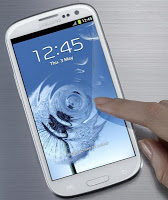
Following the partial bypass vulnerability in Note II, a new security flaw has been discovered that allows hackers to completely bypass lock screen on Samsung Galaxy S3 .


The bug was discovered by Sean McMillan and posted as Full disclosure in the Seclists mailing list.

The instruction provided by McMillan : How to bypass the Lock screen in galaxy S3 
1) On the code entry screen press Emergency Call
2) Then press Emergency Contacts
3) Press the Home button once
4) Just after pressing the Home button press the power button quickly
5) If successful, pressing the power button again will 
bring you to the S3's home screen


McMillan said that it can "take quite a few attempts to get this working, sometimes this method works straight away, other times it can 
take more than 20 attempts." 

'''BREAKING NEWS'''

 "" Suspected Hacker arrested for World's Biggest DDoS attack against Spamhaus"" 


The Dutch police have confirmed the arrest of a 35- year-old man suspected of taking part in a massive DDoS attack against the anti-spam group Spamhaus back in March. The attack's bandwidth peaked at over 300Gbps, making it the largest DDoS attack in history. Their target, Spamhaus, is a company which creates blacklists of spam sites and sells them to Internet Service Providers. Spamhaus was attacked with DDOS and the website overcrowded with traffic and went offline. Later CloudFlare was hired by Spamhaus to protect against such attacks. The suspect was arrested by Spanish authorities in Barcelona based on a European arrest warrant and is expected to be transferred to the Netherlands soon. The man arrested is believed to be Sven Kamphuis, the owner and manager of Dutch hosting firm Cyberbunker that has been implicated in the attack. This DDoS attack was believed to have been sparked when Spamhaus placed CyberBunker on its spam blacklist. Cyberbunker is a Dutch company based in a former nuclear bunker that provides anonymous hosting of anything except terrorist or child pornography websites. "Spamhaus is delighted at the news that an individual has been arrested and is grateful to the Dutch police for the resources they have made available and the way they have worked with us," said a Spamhaus spokesman. The investigation was conducted in the Netherlands by the High Tech Crime Team and at the request of the National Prosecutor in Barcelona, the suspect's house was searched and authorities seized mobile phones, data carriers and computers from the property.

Monday, April 29, 2013

Top 10 PC Games Chart 2013

Top 10 Games of 2013


Here's the List of Top 10 PC Games of April 2013 these games are rated by the Gamers who always stick them self around their Pc's or PS or any other Game machines :p
Enjoy


1.) BioShock Infinite


Some Screen Shots


BioShock Infinite is a first-person shooter video game developed by Irrational Games, and published by 2K Games. Previously known as "Project Icarus" in development, it was released worldwide on the Microsoft WindowsPlayStation 3, and Xbox 360 platforms on March 26, 2013. BioShock Infinite is the third installment in the BioShock series, and though it is not part of the storyline of previous BioShock games, it does feature similar gameplay concepts and themes. The game's concept and setting were developed by Irrational's creative lead, Ken Levine, who took inspiration from both historical events at the turn of the 20th century, as well as more recent ones at the time such as the "Occupy" protests.


BioShock Infinite system requirements:

MINIMUM
  • OS: Windows Vista Service Pack 2 32-bit
  • Processor: Intel Core 2 DUO 2.4 GHz / AMD Athlon X2 2.7 GHZ
  • Memory: 2 GB
  • Hard Drive: 20 GB free
  • Video Card: DirectX10 Compatible ATI Radeon 3870 / NVIDIA 8800 GT / Intel HD 3000 Integrated Graphics
  • Video Card Memory: 512 MB
  • Sound Card: DirectX Compatible
RECOMMENDED
  • OS: Windows 7 Service Pack 1 64-bit
  • Processor: Quad Core Processor
  • Memory: 4 GB
  • Hard Drive: 30 GB free
  • Video Card: DirectX11 Compatible, ATI Radeon 6950 / NVIDIA GeForce GTX 560
  • Video Card Memory: 1024 MB
  • Sound Card: DirectX Compatible
For the many-monitored, Irrational’s release also mentions that Infinite will support AMD EyeFinity, NVIDIA Surround, and Matrox TripleHead2Go. Hooray!


2.) Dragon Age: Origins – Ultimate Edition


Some Screen Shots


Below are the official PC hardware and OS requirements for Dragon Age: Origins (both original and Ultimate Edition), as featured in the readme.txt that ships with the game: 


Bioware's Windows XP MINIMUM System Requirements
*Windows XP with SP3
*CPU: Intel Core 2(or equivalent) running at 1.6Ghz or greater 
*CPU: AMD X2(or equivalent) running at 2.2Ghz or greater
*RAM: 1GB or more
*VIDEO: ATI Radeon X850 128MB or greater
*VIDEO: NVIDIA GeForce 6600 GT 128MB or greater

Bioware's Windows Vista MINIMUM System Requirements
*Windows Vista with SP1
*CPU: Intel Core 2 (or equivalent) running at 1.8Ghz or greater
*CPU: AMD X2(or equivalent) running at 2.6Ghz or greater
*RAM: 1.5 GB or more
*VIDEO: ATI Radeon X1550 256MB or greater
*VIDEO: NVIDIA GeForce 7600 GT 256MB or greater

Bioware's RECOMMENDED System Requirements
*CPU: Intel Core 2 Quad 2.4Ghz Processor or equivalent
*CPU: AMD Phenom II X3 Triple-Core 2.8 GHz or greater
*RAM: 4 GB (Vista) or 2 GB (XP)
*VIDEO: ATI 3850 512 MB or greater
*VIDEO: NVIDIA 8800GTS 512 MB or greater


3.) Monaco: What’s Yours Is Mine


Some screen shots


4.) Age of Empires I HDI HD

5.) Don’t Starve


6.) Surgeon Simulator 2013


7.) Max Payne 3


8.) L.A. Noire: The Complete Edition


9.) StarDrive


10.) Wargame: Airland Battle


Saturday, April 27, 2013

Paint your TV anywhere on your own style


Gesture controls are making their way into all kinds of devices, and it’s even possible to make any surface a touch screen. Now the folks at Carnegie Mellon University have taken the concept a step further. With just a wave of your hand, you can turn any surface into a customized touch screen remote for your TV or an interface for your computer.


Unleash Your Inner Jedi With Arm Band

It’s called the WorldKit. With it, you can “paint” a TV remote onto your coffee table, for example. The interface can be moved, modified or deleted with similar gestures, making them highly personalized.

It works using a ceiling-mounted camera that registers where a person’s hand is. A projector puts the image onto a surface (a couch, for example). When the camera senses gestures from the hand, it will tell the computer to engage certain functions such as “painting” for instance, so a user can draw a keyboard. Another gesture will register as the equivalent of a point and click on a mouse or the tap on a tablet screen.

Robert Xiao, an HCII doctoral student and one of the developers, said in a press release that WorldKit doesn’t require any calibration, and that the WorldKit system can work without having to mount cameras on the ceiling — a pretty involved project by any measure. Instead, a person could use a Kinect, which has god quality depth sensors that could fit into something like a light bulb mounted overhead.

Reach Into Transparent Computer, Grab Content

Xiao developed WorldKit with HCII professor Scott Hudson and Chris Harrison, a Ph.D. student. The team will present their work April 30 at CHI 2013, the Conference on Human Factors in Computing Systems, in Paris.

New LED Streetlight Design Cuts Light Pollution


Streetlights area unit thus bright they'll be seen from orbit and even may tell aliens we’re here on Earth.

But the lights area unit misdirected. They usually illuminate places that don’t got to be lit and make lightweight pollution that creates life tougher for astronomers and amateur stargazers to envision the night sky and may even confuse migratory birds, leading them to crash into buildings.

Light Pollution Blankets Even The Brightest Stars

To solve this drawback, Xuan-Hao Lee and Ching-Cherng Sun of the National Central University of Taiwan and Ivan Moreno of the Autonomous University of Zacatecas in Mexico designed a brand new quite street lamp, one that shines most of the sunshine on the bottom.

The planned lamp contains lightweight emitting diodes, or LEDs, mounted within alittle housing. every light-emitting diode is fitted with a lens and a diffusive layer. The lens shines lightweight in parallel rays, whereas the housing reflects any spilled lightweight toward the bottom. The diffusive layer cuts glare, creating the sunshine “softer.” The result's a beam of sunshine formed additional sort of a parallelogram, than a cone. the oblong form puts additional of the sunshine onto the road.

Should we tend to put off The Lights?

By moving additional lightweight to the road, the new lamp conjointly saves energy, since fewer of them would be required to light a given space, and also the range of LEDs required to urge the equivalent quantity of sunshine would be smaller. LEDs, whereas costlier than typical bulbs, also are additional energy economical. additional of the electrical current that goes into AN light-emitting diode makes lightweight, whereas with normal bulbs lots of the electricity is wasted as heat.

Sun aforementioned in a very handout that the entire energy savings can be massive — some forty to sixty % over current streetlamps.